





Best visits Loire Valley châteaux: Book your tickets now.
- Loire Valley Châteaux Pass (3 must-see châteaux)
- Château de Chenonceau ticket
- Château de Chambord ticket
- Royal Château d'Amboise ticket
Follow all our adventures on Instagram by clicking here 🩵
Nicknamed the "garden of France", this region is home to an impressive concentration of royal châteaux bearing witness to the rich and fascinating history of the French monarchy. These châteaux, often magnificent and steeped in mystery, are key monuments for any visitor discovering the region.
Super practical: just select your dates, then receive your tickets by email. An advantage for avoiding queues and saving money.
The Pass includes access to:
- the Château de Chenonceau
- the Château de Chambord
- Choice between the Château de Blois, the Royal Château d'Amboise or the Château du Clos Lucé
Buy your pass here (skip-the-line tickets with free cancellation)
1. Château de Chenonceau, our favourite
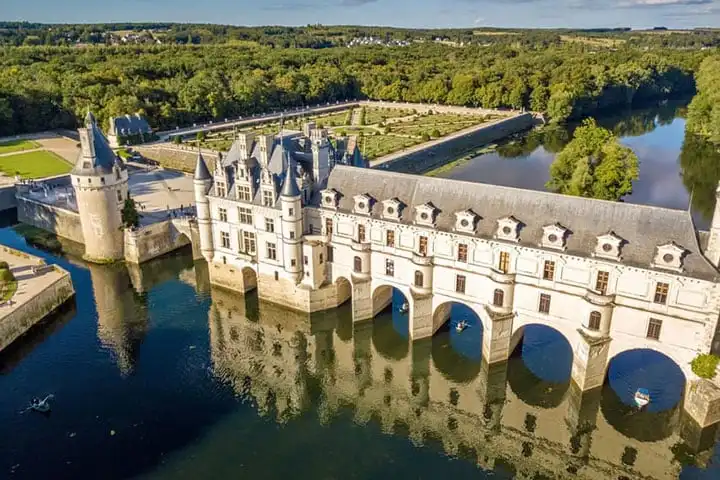
The Château de Chenonceau is one of the most famous in the region, notably because of its unique architecture, rising majestically over the Cher. Built by Katherine Briçonnet in 1513, then enhanced by Diane de Poitiers from 1547 after she received it as a gift from Henri II, it was finally enlarged under Catherine de Médicis before becoming the refuge of Louise of Lorraine, the white queen and widow of Henri III. Today the Château is one of the 3 must-see Loire châteaux not to be missed.
How long does it take to visit the Château de Chenonceau? Allow 2 to 4 hours to visit the whole estate. You will be amazed by the château gallery, a covered bridge crossing the Cher, offering a spectacular view and built on the foundations of the old mill. It was also a central place for the château's historical events.
Not to miss during this visit:
- the French-style gardens designed by Catherine de Médicis and Diane de Poitiers
- the salon of Catherine de Médicis, an intimate and refined place that immerses you in the atmosphere of the 16th-century royal court.
- the Chenonceau museum, where you will discover an impressive collection of artworks and objects that belonged to the great historical figures of the château.
2. The sumptuous Château de Chambord
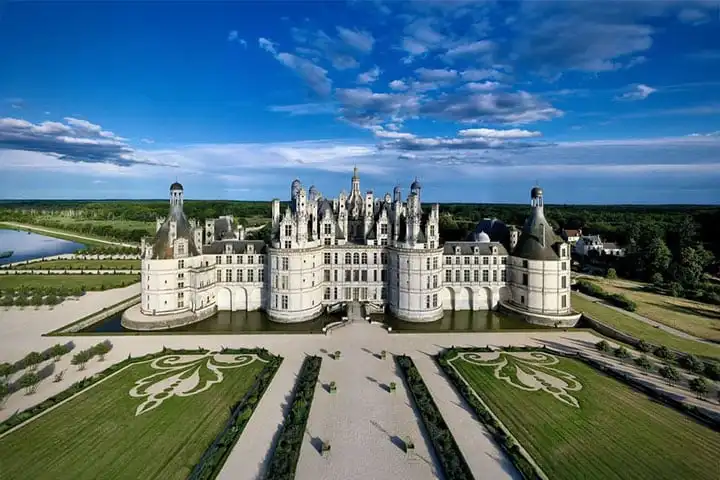
Among the Loire châteaux you absolutely must visit, there is of course the Château de Chambord. A true masterpiece of the Renaissance, it is a symbol of the power of King Francis I.
Not to miss during your visit:
- the unmissable double-helix staircase, a true architectural wonder, often said to have been designed by Leonardo da Vinci.
- the terrace, which offers an unbeatable view over the Chambord forest, one of the largest in Europe.
- the guardroom, decorated with ancient tapestries
- the king's bedchamber, where you will discover the importance of Chambord as a royal residence.
- Finally, if you have time, a carriage ride through the forest estate is an excellent way to soak up the natural beauty of the place.
- Maison Hulotte, in Amboise rated 9.5 Exceptional on Booking
- Hôtel Spa - Au Charme Rabelaisien, in Amboise rated 9.2 Fabulous on Booking
- Fleur de Loire in Blois rated 9.1 Fabulous on Booking and 9.5 for its exceptional location
- Le Manoir Saint Thomas, rated 9.3 on Booking and 9.7 for its location
3. Château d'Azay-le-Rideau, a must-see
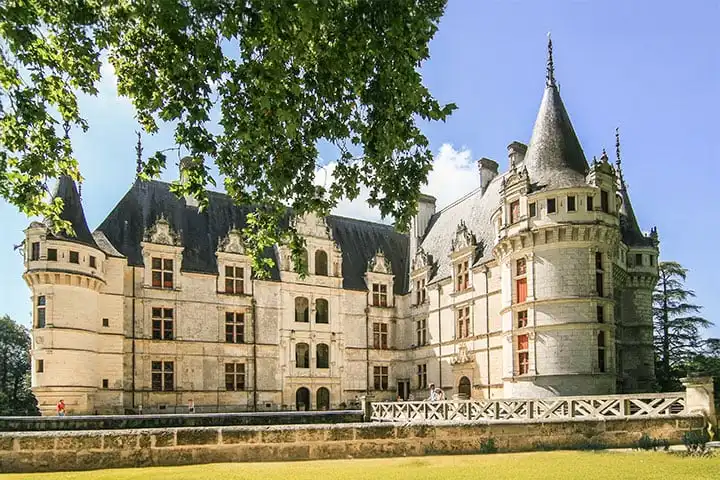
The Château d'Azay-le-Rideau is one of the most romantic in the region, built on an island in the middle of the Indre. Its slender shape and diamond-shaped windows make this château a must-see.
From 1791 to 1899, the château belonged to the Marquis de Biencourt. It was Armand François de Biencourt who undertook the first major restoration of the building, giving the château unity in a Renaissance style.
Not to miss during your visit:
- the gardens that surround the château and offer a lovely reflection of the building in the water
- the dining room
- the bedroom of Gilles Berthelot, the founder of the château, a must to immerse yourself in the atmosphere of the Renaissance.
- If you get the chance, attend a concert or cultural event, which often take place on the estate.
Best activities to do at the Loire Valley châteaux
4. Château de Chaumont-sur-Loire
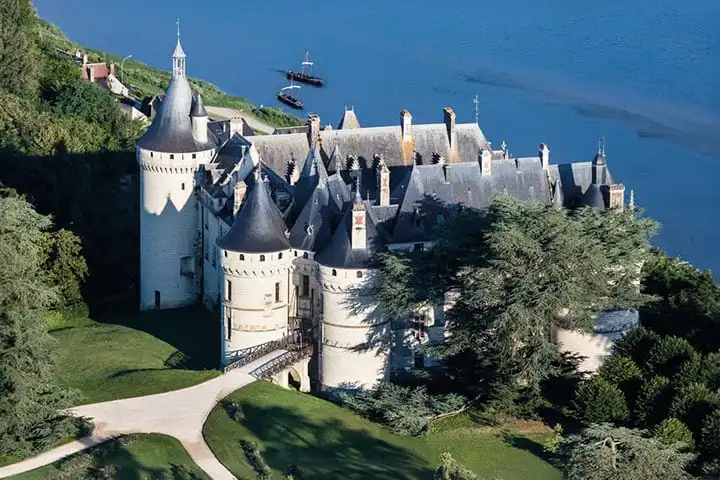
Built in 1884 by Henri Duchêne, a great French landscape architect of the 19th century, the Château de Chaumont-sur-Loire is as famous for its International Garden Festival as for its medieval architecture. It is ideal for lovers of nature and design. As a bit of history, the Count of Blois, called Odo I, had a fortress built as early as the 10th century to protect Blois from attacks by the Count of Anjou. As a thank-you, Chaumont was given to the Norman knight Gelduin the Younger.
Not to miss during your visit:
- the park and its themed gardens, notably the contemporary gardens created every year by landscape designers from around the world.
- the château's frescoes room is also a must, with wall paintings dating from the 16th century.
- Finally, the panoramic view from the terrace over the River Loire and the surrounding countryside is breathtaking.
Allow about 3 hours to visit the Château de Chaumont-sur-Loire.
- What to do in Versailles besides the Château? 10 unusual visits
- What to see in Dordogne? Villages, caves and châteaux
- Bordeaux: top 40 activities to discover
- What to see in the Basque Country: Top villages and must-do activities
- Visit Venice in 1 day: our must-sees
- The most beautiful villages in Menorca to see
- The most beautiful places on the Crozon peninsula: Top 10
- Visit Sintra in 1 day: our must-sees
5. Château du Clos Lucé, Leonardo da Vinci's residence
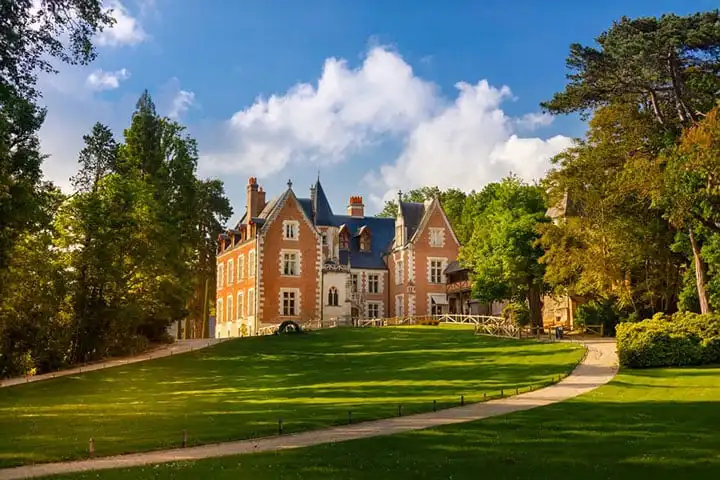
If you are wondering which Loire châteaux you absolutely must visit, here is Clos Lucé to add to your list. Built in the 15th century, the Château du Clos Lucé is an essential stop for history and science enthusiasts, located in Amboise, in the Loire. This château is famous for having been the residence of Leonardo da Vinci during his last years in France, invited by King Francis I. You can discover his apartment, where he lived from 1516 to 1519, as well as several reconstructions of his inventions and drawings. As a bit of history, it was here that Leonardo da Vinci died, leaving an immense legacy in the fields of art and science.
Not to miss during your visit:
- The museum of Leonardo da Vinci's inventions, with models of his famous machines,
- The Renaissance garden, which presents a fine collection of medicinal plants and vegetables grown in Leonardo's time,
- The château chapel, where he is buried, and the interior of Leonardo's apartment, faithful to the period.
Allow about 2 hours to visit the Château du Clos Lucé.
6. Château de Blois, a medieval fortress
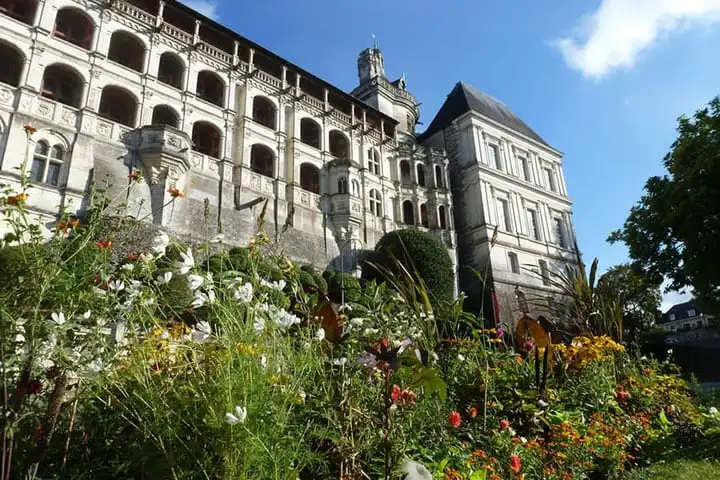
The Royal Château de Blois reflects the many architectural influences that have marked the history of France. The château courtyard, home to the remarkable Renaissance spiral staircase, is a central point of the building.
Many kings of France lived here, such as Louis XII, Francis I or Marie de Médicis. As a bit of history, the château was the scene of several major events, such as the assassination in December 1588 of Henri de Lorraine, leader of the Catholic League and 3rd Duke of Guise. The tower's mission was to defend the south-west corner of the château in the Middle Ages, as well as the Foix gate, nestled at the foot of the rocky spur.
Not to miss during your visit:
- the Saint-Hubert chapel, an intimate space where Louis XII and Francis I made their mark on the history of France.
- the Estates General assembly hall, a key historical place where members of the French government met at different times.
- the panoramic view over the town, Blois and its Saint-Nicolas church.
- Finally, attend the sound and light show that brings the château to life every evening, a magical way to discover its history.
7. Château du Rivau and its gardens
The Château du Rivau is a real hidden treasure, with its magnificent gardens and its many architectural details. It is also the oldest château of all the Loire Valley châteaux. Located near Chinon and built in the 15th century, this is where King Charles VII of France lived. The château has a medieval character that contrasts with its fairytale-inspired gardens.
Not to miss during your visit:
- the 14 themed gardens that create a magical atmosphere.
- the labyrinth garden or the witches' garden, a marvel to see.
- the knights' hall, adorned with medieval frescoes, letting you imagine life in the Middle Ages.
8. Château de Brézé
Listed as a "Grand Site of the Loire Valley", the Château de Brézé is unique thanks to its impressive network of underground passages and moats. This very well-preserved 16th-century medieval château has a remarkable fortified basement, carved into the rock.
Not to miss during your visit:
- the tour of the cellars and moats, where you can explore the former fortifications and underground installations, used for defence and storage.
- the knights' hall area with its exposed-beam ceiling and medieval atmosphere.
- Don't miss a walk around the park to enjoy the calm and the surrounding nature.
9. The Royal Château d'Amboise
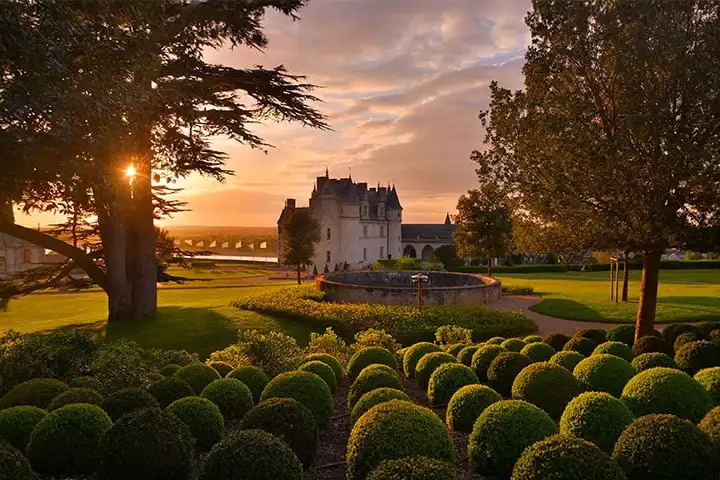
The Royal Château d'Amboise, a place steeped in history, was home to several kings of France, notably Charles VIII and Francis I. This is where the tomb of Leonardo da Vinci lies, placed in the chapel in the mid-19th century, after he lived there for 3 years from 1519.
Not to miss during your visit:
- the Saint-Hubert chapel, where Leonardo da Vinci lies, a truly fascinating place of contemplation.
- the spiral staircase, which gives access to the upper floors of the château, another highlight of the visit.
- Don't miss a stroll in the hanging gardens, from where you can admire an unbeatable view of the town of Amboise and the Loire.