





Travel tips for a stay in Warsaw:
- ✈️ Book your flight to Gdansk (best prices)
- 🏨 Best hotels in Gdansk (most popular with travellers)
- 🗺️See all the activities to do in Gdansk
Follow all our adventures on Instagram by clicking here 🩵
- City cruise on a historic Polish boat
- Museum of the Second World War ticket
- European Solidarity Centre visit ticket
- Westerplatte: guided round-trip cruise
- Olivia Star: stunning rooftop above the sky, dinner and cocktails
- Unusual: firearms shooting experience with instructor
- Guided Polish beer tasting tour
- Vodka tasting with a guide
What to do from Gdansk?
Visit Gdansk: our top 10 must-sees
A former great port of the Hanseatic League and now Poland's most important port, Gdańsk was marked forever by the Second World War, of which it was one of the starting points. Between its meticulously rebuilt historic centre, its fascinating museums and its waterside walks, the city has a thousand faces to offer. So, what to see and do in Gdańsk on a first visit?
1. Stroll along the Royal Way (Ulica Długa & Długi Targ)
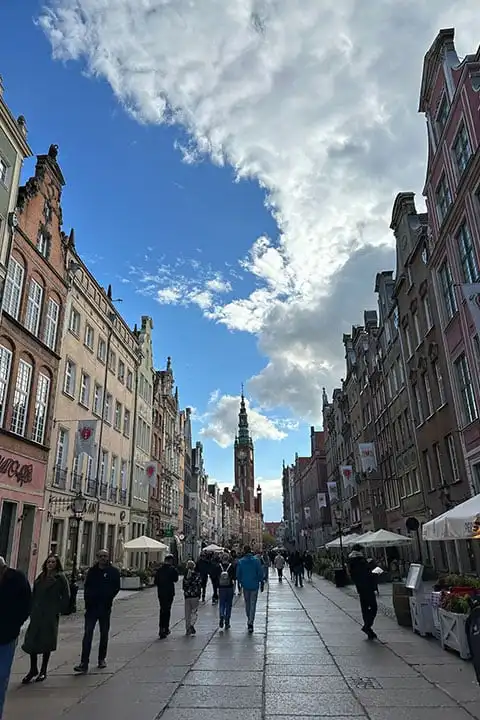
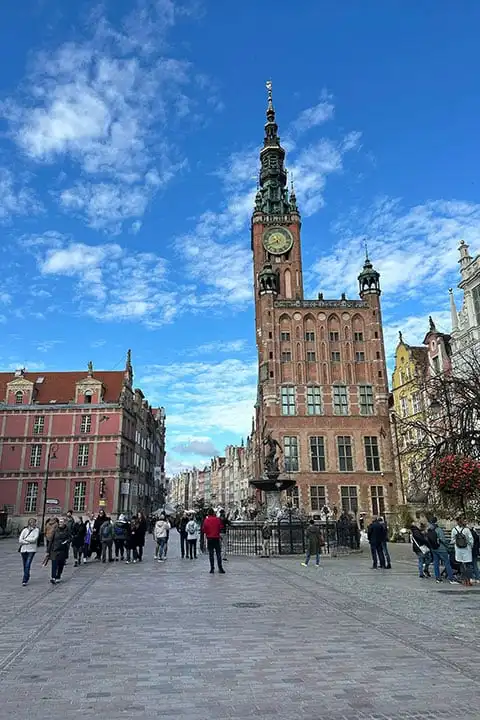
The famous "Royal Way" is the main artery of the old town, the historic heart of Gdańsk, ideal for strolling and admiring the Hanseatic architecture rebuilt after the war.
Once the route of royal processions during major state visits, the Royal Way crosses the heart of the old town and concentrates the history, charm and pride of Gdańsk. It stretches from the High Gate (Złota Brama) to the Green Gate, passing a succession of architectural treasures.
The walk begins at the High Gate, a remnant of the 15th-century fortifications, then leads to the Golden Gate, a Renaissance masterpiece adorned with sculptures symbolising peace, freedom and wealth. Moving on, you find yourself on Ulica Długa and Długi Targ (the Long Market), lined with houses with colourful, richly decorated façades, once owned by wealthy merchants of the Hanseatic League.
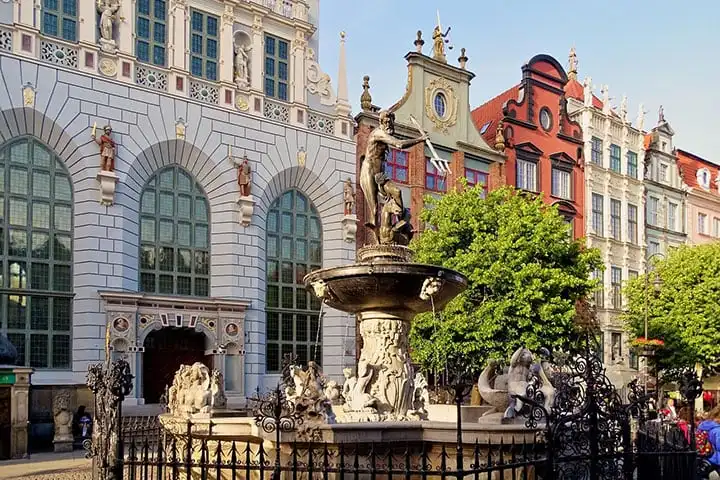
In the centre stands Neptune's Fountain, the emblem of the city, here since the 17th century in tribute to Gdańsk's link with the sea. Right next to it, the Artus Court, the former hall of the merchant guilds, reveals a sumptuous interior recalling the city's golden age.
The walk also holds a few curiosities: the Torture House and the Prison Tower, witnesses of a sometimes dark medieval past, which served as both a guardhouse and a place of detention.
2. See St. Mary's Church (St. Mary's Basilica)
Dominating the old town with its imposing silhouette, St. Mary's Basilica is the largest brick church in the world, able to hold up to 25,000 people. Built between 1343 and 1502, it is a masterpiece of Baltic Gothic, impressive as much for its size as for its elegant sobriety. Inside, the light filtering through the tall windows illuminates an immense space, punctuated by richly decorated altars and old paintings. The centrepiece is the 14 m-high astronomical clock, dating from 1464, which shows not only the time but also the phases of the moon and a liturgical calendar. The more athletic can climb the more than 400 steps leading to the top of the tower: the reward is an exceptional panoramic view over the red roofs of Gdańsk, the Motława river and, in clear weather, the Baltic Sea. Visiting St. Mary's means plunging into seven centuries of history and admiring one of the city's most emblematic symbols.
- PURO Gdańsk Stare Miasto, rated 9.8 exceptional for its location on Booking
- MONTOWNIA Lofts & Experience, rated 9.6 exceptional on Booking
- The Cloud One Gdansk, rated 9.2 fabulous for its calm atmosphere and comfort
- HOTEL GRANO Gdańsk Old Town, rated 9.1 Fabulous for its excellent location
- Hotel Gdańsk Boutique, rated 9.0 fabulous for its gourmet breakfast
3. Visit Gdansk and stroll along Mariacka Street
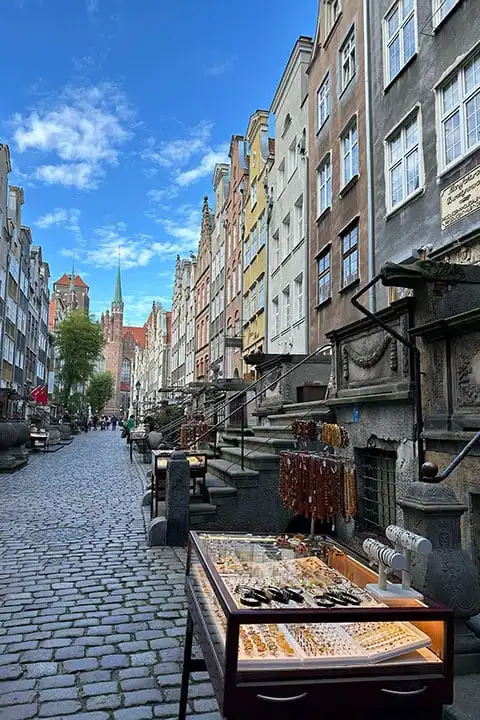
Often considered the most picturesque street in Gdańsk, Mariacka Street charms at first sight with its old cobblestones, narrow colourful façades, and raised terraces adorned with stone balustrades. Once inhabited by wealthy merchants, it retains a timeless charm. Today it is the realm of amber, "the gold of the Baltic": its many jewellery shops display necklaces, rings and sculptures crafted from this millennia-old resin. Between shop windows, you discover small cafés with a hushed atmosphere, perfect for lingering as a couple or with friends. The street leads directly to St. Mary's Basilica, creating a natural link between two jewels of the old town. In the evening, the soft lighting and old street lamps turn the place into a postcard setting, ideal for a romantic walk or a few memorable photos.
Probably one of the most beautiful streets in the old town. Lined with colourful buildings, it is full of amber jewellery shops (a local speciality) and charming cafés where you can sip a drink with friends or loved ones.
4. Discover the European Solidarity Centre (ECS)
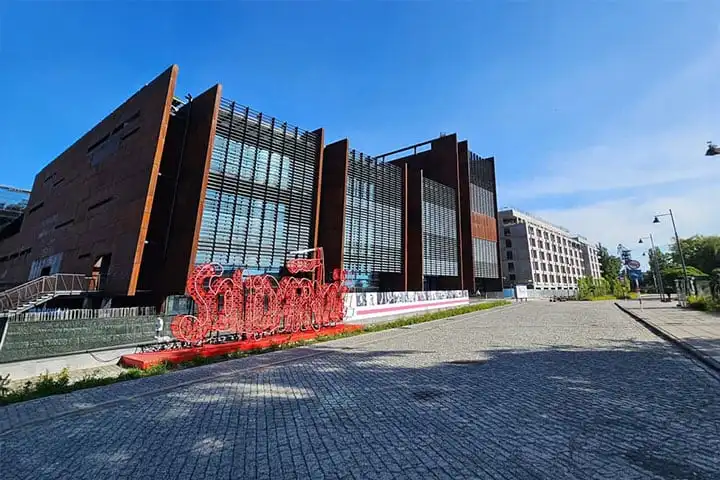
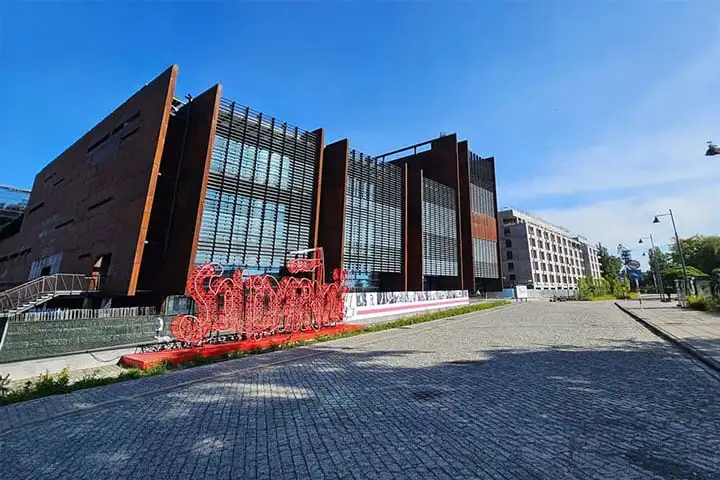
Located a stone's throw from the former shipyards, this industrial-design building recalls the rusty hulls of the ships that made Gdańsk's reputation. The European Solidarity Centre traces the history of the Solidarność movement, born here in the 1980s, which played a key role in the fall of communism in Poland and Eastern Europe. The visit is immersive, punctuated by archive films, authentic objects and striking reconstructions. You can even walk into the room where the August 1980 agreements were signed, a historic moment that changed the country's destiny. The building's roof, laid out as a garden, offers a stunning view of the shipyard and the city.
5. Explore the Museum of the Second World War
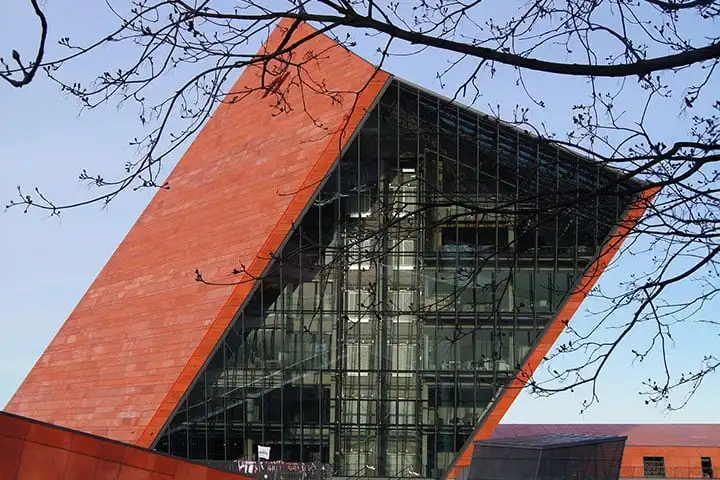
This museum impresses with its size and bold architecture: a building partially buried in the ground, symbolising the dark past of war. The exhibitions, extremely well documented, address the conflict globally, while highlighting the particular history of Gdańsk and Poland. Reconstructions of bombed streets, poignant testimonies, everyday objects… the scenography carries the visitor into the heart of events. It is a striking experience, both educational and emotional, that helps you understand the global scope of the tragedy that began here in 1939.
6. Walk in the footsteps of history at Westerplatte
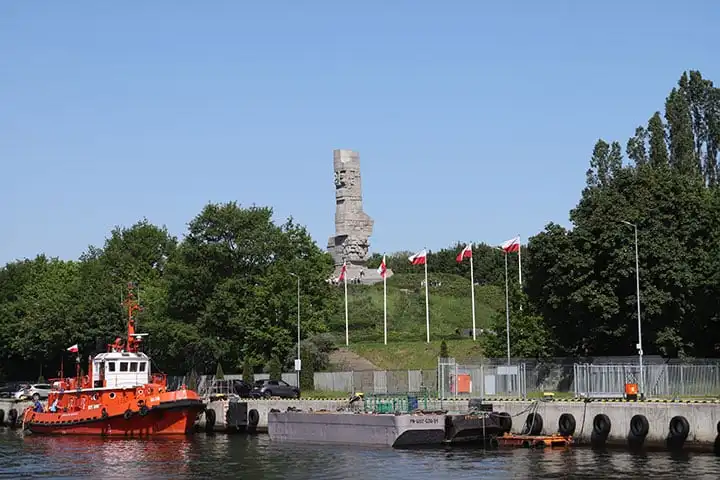
This small wooded peninsula, at the mouth of the Motława, entered History on 1 September 1939, when the first shots of the Second World War were fired here. Today, the site blends nature and remembrance: there is a large memorial, remains of barracks and paths leading to the water's edge. The walk is peaceful but full of emotion, ideal for understanding Gdańsk's strategic importance at the time.
7. What to do in Gdansk: admire the Medieval Crane (Żuraw)
An essential symbol of Gdańsk, the medieval crane stands proudly on the banks of the Motława. Built in the 15th century, it was used to load goods and to raise ship masts. With its imposing wooden mechanisms operated by human power, it is a unique testimony to the technical genius of the time. Now part of the maritime museum, it lets you discover the bustling life of the port in Hanseatic times.
- Visit Warsaw in 3 days: top must-do activities
- Visit Krakow in 3 days: top 10 must-sees
- Visit Zurich in 1 day: our top 10 must-sees
- Which Loire Valley châteaux to visit without fail?
- Top 10 most beautiful villages in Puglia
- Visit the Cinque Terre in 3 days: what to do? what to see?
- What to do in Santa Cruz de Tenerife?
- Top 10 most beautiful villages in the Dolomites
8. The Great Arsenal (Wielka Zbrojownia)
Built between 1602 and 1605, the Great Arsenal is a gem of Mannerist architecture. Its façades richly decorated with sculptures and pediments evoke the city's military and economic power in the 17th century. Once used to store weapons and protect the city, the building now houses the Academy of Fine Arts, as well as temporary art and design exhibitions.
9. Visit Gdansk and its English House (Dom Angielski)
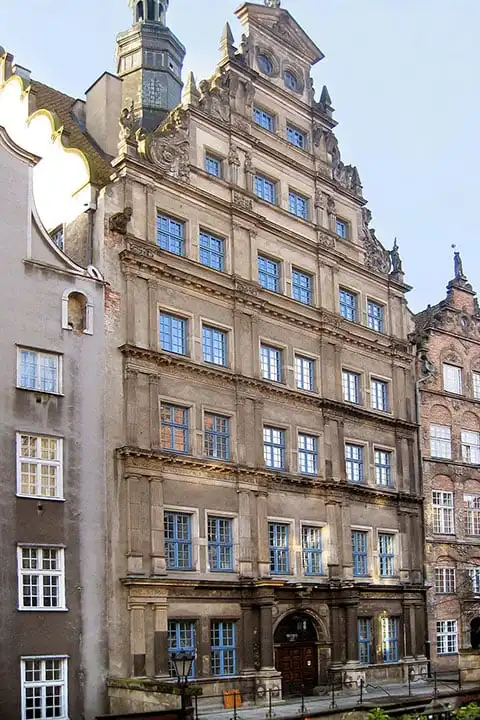
Built between 1568 and 1570, this monumental residence is a masterpiece of Polish Renaissance. Its façade adorned with statues, columns and gilded cornices bears witness to the architectural refinement of the era. It owes its name to the English merchants who once lived there. Today, it houses the Faculty of Graphic Design of the Academy of Fine Arts, but its exterior alone is worth the detour during a walk in the historic centre.
10. Stroll along the Motława and on Granary Island
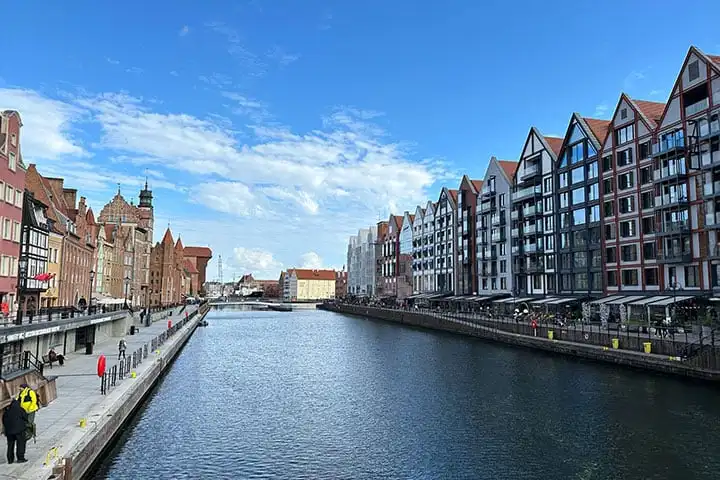
Along the Motława river, the promenade offers splendid views of the colourful façades of the old town and the silhouette of the medieval crane. You then cross over to Granary Island, where old warehouses have been renovated to house restaurants, bars and design hotels. It is the perfect place for a terrace break, a boat cruise or simply to enjoy the harbour atmosphere at sunset.
What to see around Gdansk?
Here are the best excursions to take if you want to visit the surroundings of Gdansk.
1. Sopot by the sea
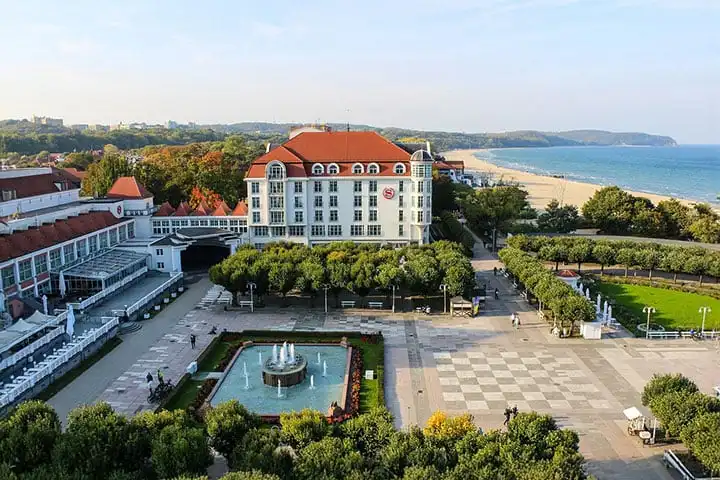
Only 20 minutes by train, this chic seaside resort is famous for its long fine sandy beach and its wooden pier, the longest in Europe. The perfect place for a relaxing day by the Baltic Sea.
2. Gdynia
Another neighbouring port city, known for its modern port, maritime museums and cultural events. Together with Gdańsk and Sopot it forms the "Tricity".
3. The Hel Peninsula
A thin strip of sand stretching 35 km into the Baltic Sea, offering beaches, fishing villages and a panoramic lighthouse. Accessible by boat in summer or by train.
4. Malbork Castle
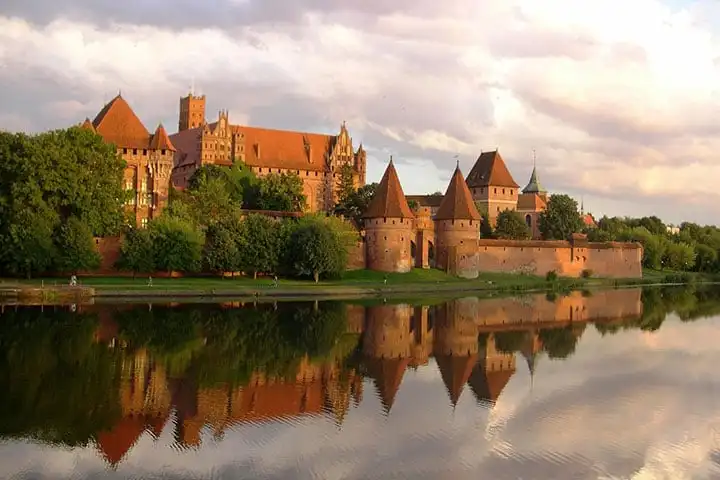
Visit the Malbork Castle from Gdansk
UNESCO-listed, it is the largest brick castle in the world and the former fortress of the Teutonic Knights. About 1 hour away by road, it is a must for history buffs.
5. Słowiński National Park
Famous for its spectacular shifting dunes that look like a desert, as well as its coastal trails and lakes. Ideal for nature lovers.
6. Oliwa
A green district a few kilometres from the centre of Gdańsk, home to a superb landscaped park and a cathedral known for its monumental organ.
7. Krynica Morska and the Vistula Lagoon
For wild, unspoilt landscapes, perfect for birdwatching or quiet walks.
That's it, our article on Visiting Gdansk ends here. We hope all these addresses help you plan your stay in Poland. All that's left is to wish you a great trip and plenty of good vibes 😎