





Travel tips for a great stay in Naples:
- ✈️ Book your flight to Naples (best prices)
- 🏨 Hotels in Naples: the best places to stay
- 🎟️ Naples: must-do activities and tours
- 🚗 Car hire in Italy: the best prices
- 🛡️ Insure your trip to Italy
Follow all our adventures on Instagram by clicking here 🩵
We recommend booking in advance, especially for the Sansevero Chapel and Pompeii.
Visit Naples in 3 days: our itinerary and 12 must-sees
Noisy, food-loving, Baroque and turned towards the sea, Naples is like no other city in Italy. Its historic centre has been a UNESCO World Heritage Site since 1995, and it holds a good share of our must-sees on its own. Three days are enough to see the essentials on foot, and even to treat yourself to a day in Pompeii.
We suggest an itinerary in three stages: the historic centre and its decumani on the first day, the archaeological museum, the Quartieri Spagnoli and the seafront on the second, then Pompeii (or Vomero hill) on the third. From the airport, the Alibus coach drops you at Piazza Garibaldi or Piazza Municipio, two good starting points.
Day 1: the historic centre of Naples
1. Walk along Spaccanapoli, the street that cuts Naples in two
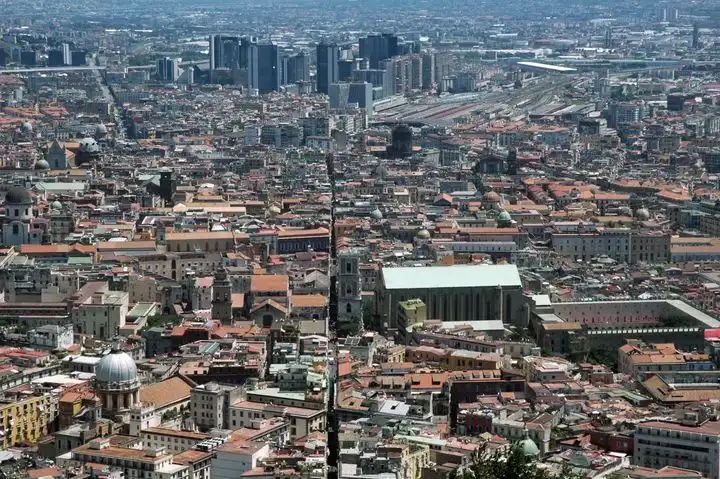
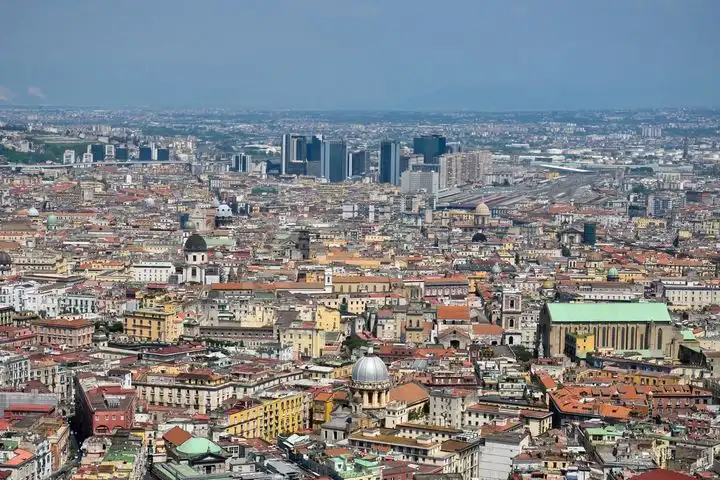
Start with Spaccanapoli, the long straight street that runs through the historic centre. Seen from above, it seems to split the city in two, hence its nickname. It is in fact the old decumanus inferior, one of the three main east–west streets of Greco-Roman Neapolis, still parallel to Via dei Tribunali.
We recommend walking it in the morning, when the cafés are opening and the lanes are still quiet. Take the time to look up: church and palace façades follow one another at every crossroads.
2. Stroll down Via San Gregorio Armeno, the street of nativity scenes
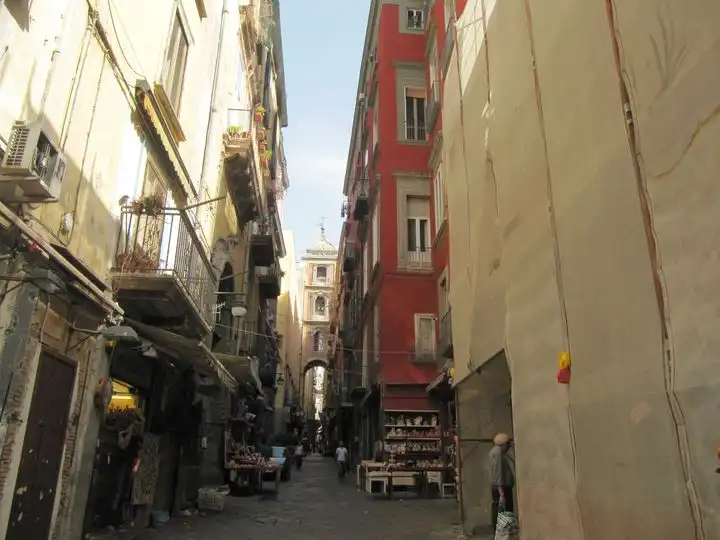
Between Spaccanapoli and Via dei Tribunali, Via San Gregorio Armeno is famous for its workshops making figurines for the Neapolitan nativity scene. Craftsmen produce traditional characters and caricatures of people in the news all year round.
In the run-up to Christmas, the street becomes one of the busiest in the city: come early if you want to look at the shop windows without elbowing your way through.
3. Admire the Veiled Christ in the Sansevero Chapel
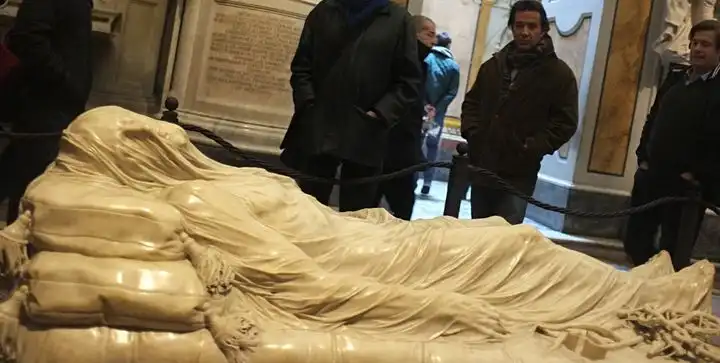
It is probably the most astonishing sculpture in Naples. In the Sansevero Chapel, the Veiled Christ by Giuseppe Sanmartino, completed in 1753 and carved from a single block of white marble, gives the illusion of a veil so fine you would think you could lift it.
💡 Practical info: the museum is open every day except Tuesday, and the number of admissions is limited. We strongly recommend booking your time slot in advance, especially at weekends.
4. The Duomo and the Treasure Chapel of San Gennaro
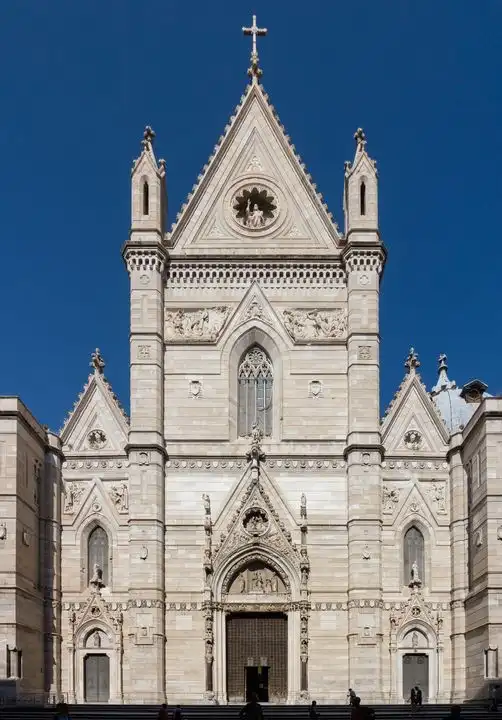
A few streets further north, the Duomo houses the Royal Chapel of the Treasure of San Gennaro, the city’s patron saint, decorated with frescoes by Domenichino and Lanfranco. Three times a year (the first Saturday in May, 19 September and 16 December), Neapolitans crowd in to witness the liquefaction of the saint’s blood.
To learn more about San Gennaro, the catacombs that bear his name can be visited with a guide.
5. Go down into Underground Naples
Another Naples lies beneath your feet: a network of tunnels and cavities dug under the historic centre. The guided tour of Napoli Sotterranea covers more than 2,000 years of history, from the Greeks to modern times.
💡 Good to know: some passages are very narrow, so the tour is not ideal if you are claustrophobic.
Day 2: archaeological museum, Quartieri Spagnoli and seafront
6. The National Archaeological Museum (MANN)
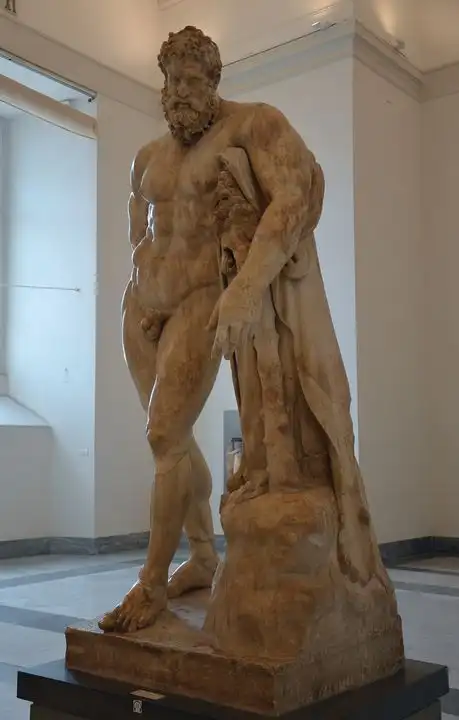
If you plan to go to Pompeii, start here. The MANN holds a large share of the treasures found in Pompeii and Herculaneum, including the famous Alexander Mosaic discovered in the House of the Faun. Don’t miss the Farnese collection and its Farnese Hercules either, or the “secret cabinet”, long reserved for an informed audience.
Allow half a day to enjoy it without rushing, and check the weekly closing day on the official website before you go.
7. The Quartieri Spagnoli and the Maradona mural
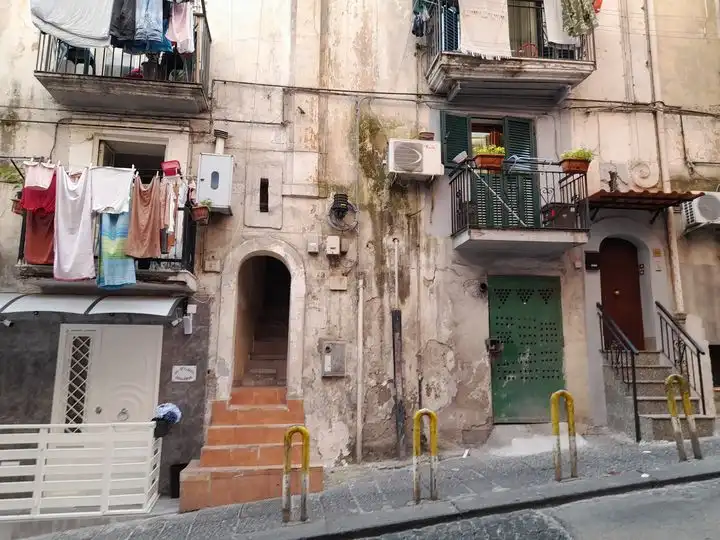
Built in the 16th century under the viceroy Pedro de Toledo to house the Spanish garrisons, the Quartieri Spagnoli form a grid of sloping lanes where washing dries from one balcony to the next. This is Naples at its liveliest, with its small trattorias and scooters weaving through everywhere.
In the heart of the district, the Maradona mural, painted in 1990 to celebrate SSC Napoli’s second scudetto, has become a real place of pilgrimage for football fans.
8. The Galleria Umberto I and the Teatro San Carlo
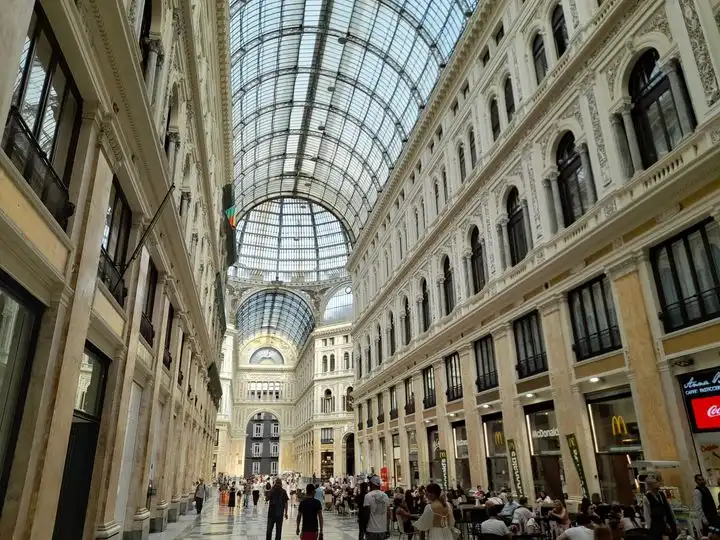
Walking back down Via Toledo, you reach the Galleria Umberto I, a shopping arcade covered by a huge glass roof, built between 1887 and 1890. Right opposite stands the Teatro di San Carlo, inaugurated in 1737 and considered the oldest opera house in the world still in operation.
9. Piazza del Plebiscito
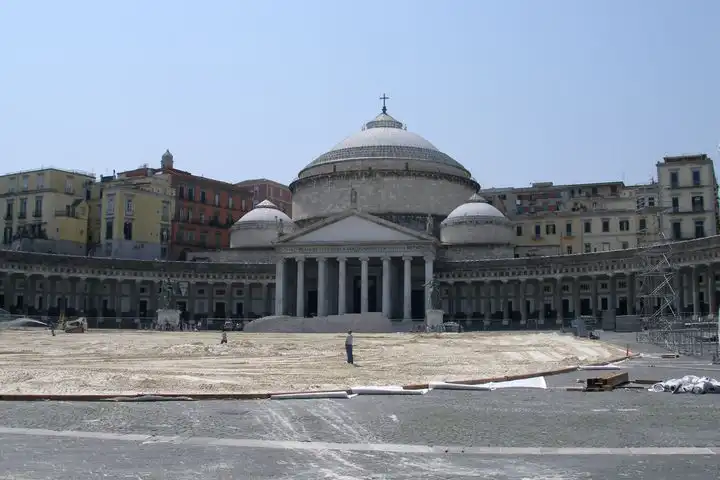
A stone’s throw away, the vast Piazza del Plebiscito is bordered on one side by the colonnade of the Basilica of San Francesco di Paola and on the other by the Royal Palace. It is the ideal spot for a coffee break before heading to the sea.
10. Castel dell’Ovo and the seafront at sunset
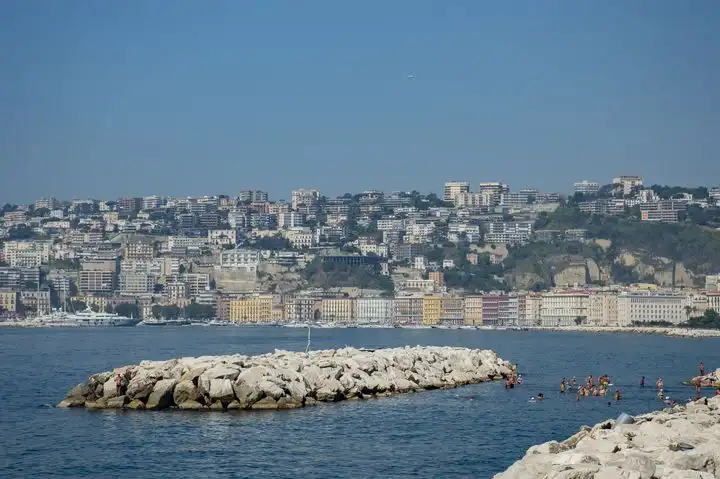
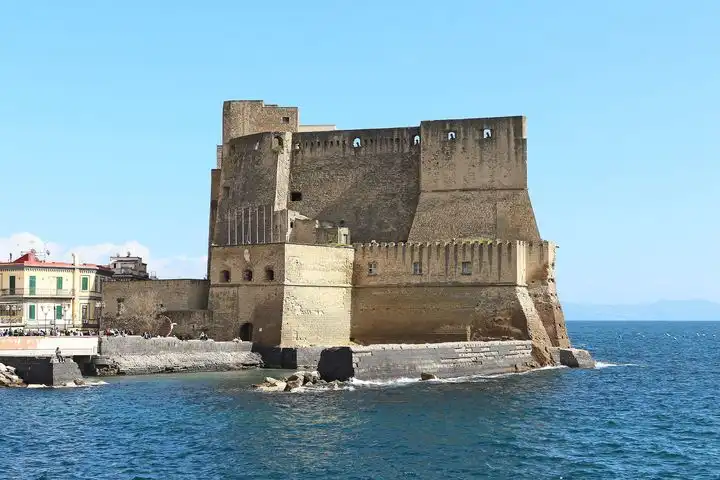
Set on the islet of Megaride, linked to the mainland by a narrow causeway, Castel dell’Ovo stands where settlers from Cumae founded the first core of the city. Its name comes from a legend: the poet Virgil is said to have hidden a magic egg in the foundations, and if it were ever to break, the castle and the whole of Naples would collapse.
End the day by walking along the lungomare, facing the bay and Vesuvius. We love strolling there at aperitivo time, when all the Neapolitans come out for a walk.
- Pompeii: tickets and guided tours
- From Naples: boat tour to Amalfi, Positano and Ravello (free cancellation)
- Herculaneum: skip-the-line guided tour with an archaeologist (free cancellation)
- Mount Vesuvius visit with ticket from Naples (free cancellation)
- From Naples: day trip to Capri and Anacapri by hydrofoil (free cancellation)
Day 3: Pompeii or Vomero
11. A day in Pompeii
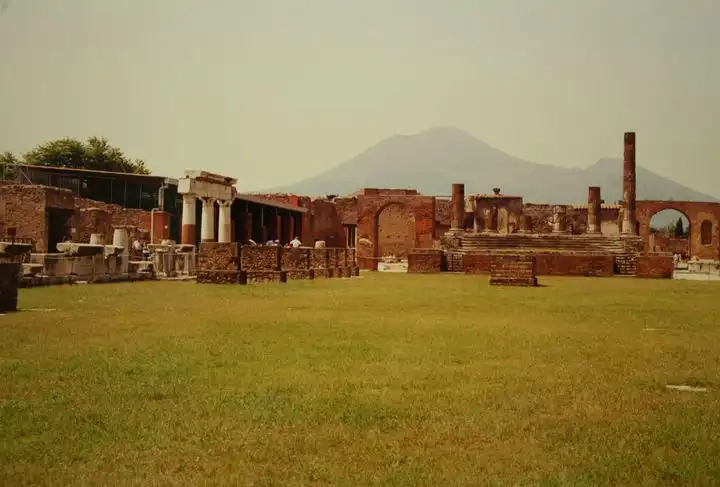
It is impossible to visit Naples in 3 days without thinking of Pompeii. From Naples station, take the Circumvesuviana train on the Naples–Sorrento line and get off at Pompei Scavi – Villa dei Misteri, right next to the Porta Marina entrance.
💡 Practical info: Pompeii tickets are personal and the number of visitors is limited to 20,000 a day. The site is open every day except 25 December and 1 January, but it closes earlier in winter: set off early. Admission is free on the first Sunday of the month, which also means big crowds.
12. Plan B: Vomero and Castel Sant’Elmo
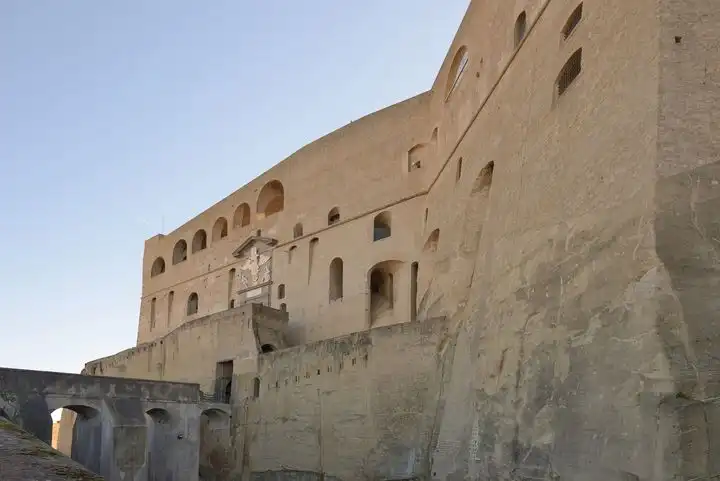
Would you rather stay in the city? Head up Vomero hill to Castel Sant’Elmo, a fortress shaped like a six-pointed star, built between 1537 and 1547. From its ramparts, the view takes in the whole bay, Vesuvius and the straight line of Spaccanapoli. It is the best panorama in Naples, and the ideal way to end your stay.
Bonus: eat a real Neapolitan pizza
In Naples, pizza is a serious matter: the art of the Neapolitan pizzaiuolo has been on UNESCO’s list of intangible cultural heritage since 2017. A margherita with a soft base and puffed-up crust is the bare minimum for your stay. And if you want to take the know-how home, book a Neapolitan pizza-making class with a local pizzaiolo.
- What to see in Rome in 3 days: Top 12 must-sees
- Visit Sicily in 1 Week: Top Must-Sees
- Visit Puglia in 7 Days: Top Itineraries and Villages to See
- Top 10 Most Beautiful Villages in Puglia
- Visit Florence in 1 Day? Top 9 Must-Sees
- Visit Tuscany in 5 Days: The Most Beautiful Villages
- Visit the Cinque Terre in 3 Days: Itinerary and Top Activities
- Visit Venice in 1 Day: Top 7 Must-Sees and Itinerary
Where to stay in Naples? Our 4 favourite addresses
For a 3-day stay, we recommend staying in the historic centre or between it and the central station: everything can be done on foot, and the train to Pompeii leaves from the station. For more peace and a sea view, aim for the Chiaia district or the area around Piazza del Plebiscito.
1. Galleria Port’Alba – Suites & Rooftop, in the heart of the historic centre
Its pluses:
- 📍 A stone’s throw from Piazza Dante, right in the historic centre
- ☀️ A rooftop terrace for an aperitivo
- 🏆 Rated over 9 on Booking
Located at Port’Alba, this accommodation is ideal for exploring the historic centre on foot, morning and evening alike.
2. La Canzonetta, between the station and the centre
Its pluses:
- 📍 On Corso Umberto I, halfway between the station and the historic centre
- 🏆 Rated over 9 on Booking, with more than a thousand reviews
A practical address if you are planning the day in Pompeii: the station is a few minutes away, and so is the historic centre.
3. Terrazza Garibaldi, a budget option near the station
Its pluses:
- 💰 One of the most affordable options in our selection
- ☀️ A shared terrace
- 🏆 Rated over 9 on Booking
Close to the central station and Piazza Garibaldi, where the Alibus airport coach stops, it is the ideal base for a smart stay.
4. Regina Margherita Suite, by the sea
Its pluses:
- 📍 Via Monte di Dio, between Piazza del Plebiscito and the seafront
- 🏆 Rated over 9 on Booking
For those who prefer a quieter, more elegant district, a few minutes’ walk from Castel dell’Ovo and the seafront promenades.