





Majorca travel tips for a top stay:
- Book your authentic stay in Majorca
- Book your flight to Majorca
- Seaside hotels in Majorca: the best places to stay
Follow all our adventures on Instagram by clicking here 🩵
Visit Palma de Mallorca on foot: TOP 10
- Guided walking tour of the old town (La Seu Cathedral, La Lonja exchange, Almudaina Palace, BORN)
- Guided bike tour of Palma
- Night tour of the old town
- Palma: food tour of the old town with tapas
- Segway ride in Palma
- Palma de Mallorca hop-on hop-off sightseeing bus ticket
- 1-hour sightseeing boat cruise from Palma
1. Go to the Llotja district
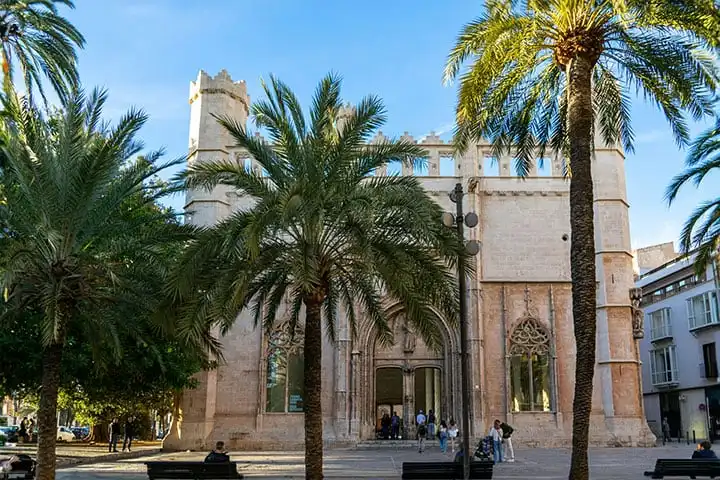
Start your walking tour in this lively district of historic charm. A masterpiece of Gothic architecture, La Llotja is a former merchants' exchange dating from the 15th century. A visit here is a must to admire:
- its twisted columns rising to the ceiling
- its impressive hall with cross-ribbed vaulting.
- the guardian angel above the main entrance, known as the protector of the merchants of the time, and the famous gargoyle carved by Guillem Sagrera, the Majorcan architect.
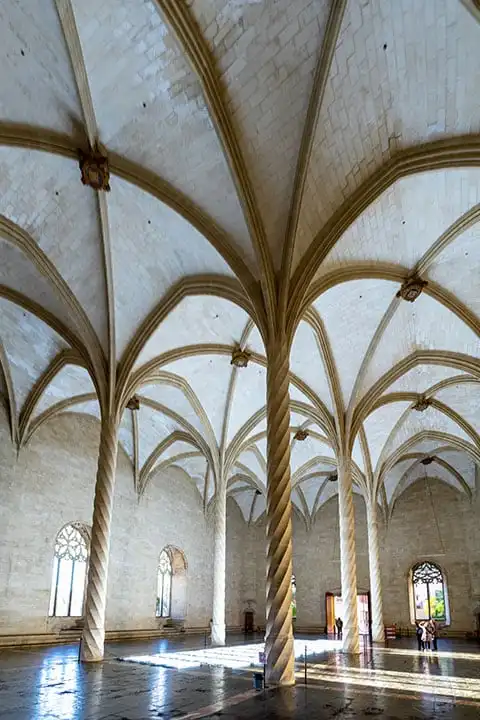
Strolling through the lanes of the district, you will feel the buzz of the maritime trade of the era, which still makes the heart of this area beat, close to the port with its view of the sea.
- Watch a flamenco show
- Rafael Nadal Museum Xperience ticket
- Fundació Miró visit ticket
- Sea cave tour by kayak
- Visit the island of Majorca from Palma (sightseeing tour)
- Jardines de Alfabia ticket
- Drach Caves visit: music concert + boat
- Take a magnificent catamaran cruise
- Palma Aquarium ticket
- Aqualand El Arenal ticket
- Katmandu Park ticket
- Take the old Tren de Sóller
2. Explore the Passeig del Born
The meeting place of the palmesanos, this wide avenue lined with trees and luxury shops is one of the most elegant in Palma. Designed in the early 19th century by Isidro González Velázquez, a famous Madrid architect, the Passeig del Born links the city centre (Plaça Juan Carlos I) to the sea. You can admire the two sphinx statues, as well as the fountain with its 4 sculpted wrought-iron turtles. The ideal place to sit on a café terrace or stroll in the shade of the plane trees. Not far away is the iconic Bar Bosch, open since 1936.
3. Visit Palma Cathedral (La Seu)
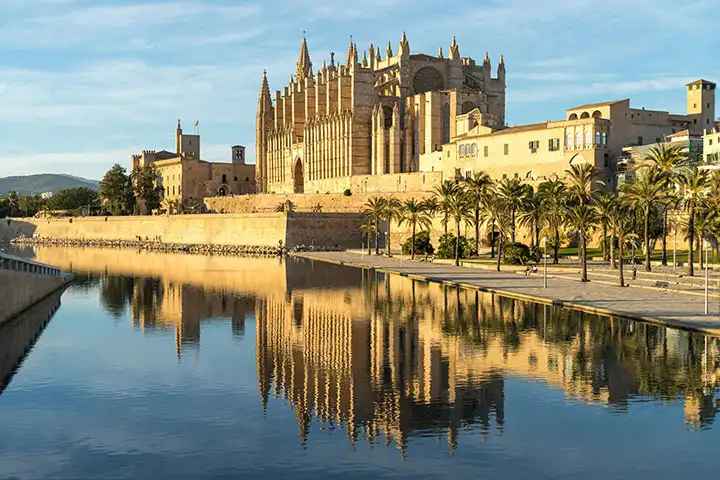
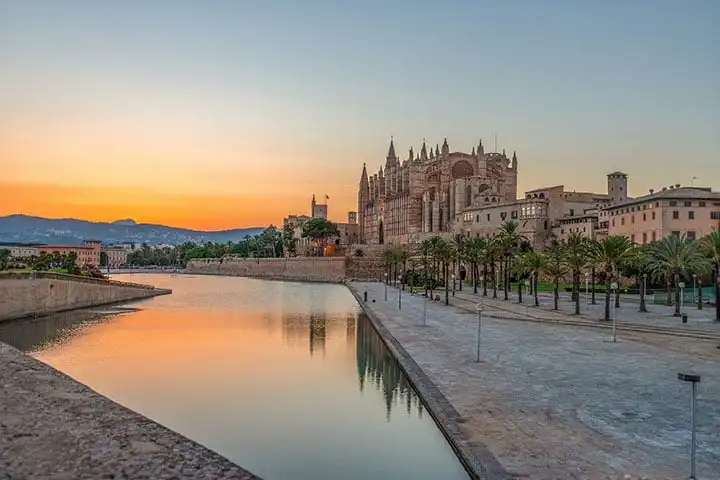
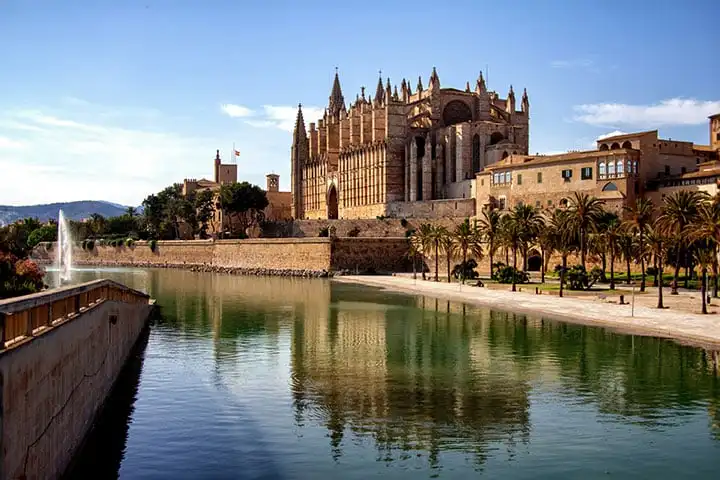
Facing the sea, this majestic Gothic cathedral, also called La Seu, is one of the symbols of Palma de Mallorca and one of the most impressive monuments on the island of Majorca. Dominating the Bay of Palma, this Gothic cathedral stands majestically facing the sea, offering a unique architectural spectacle. Built between the 13th and 17th centuries, it combines both Gothic influences and Modernist elements added by Antoni Gaudí in the early 20th century.
Inside, you can admire the finely carved details and the stained-glass windows, including the large central rose window, one of the largest in Europe, which floods the cathedral with light in the morning. Gaudí also redesigned the choir, adding a few Modernist touches such as a wrought-iron chandelier and openings that let in more light.
The exterior of the cathedral, with its imposing buttresses and flying buttresses, is just as magnificent. Around Palma Cathedral are peaceful gardens and the Parc del Mar, a perfect spot to admire La Seu with its towers reflected in the waters of a pond.
- Palma de Mallorca: what to do? 35 incredible activities
- The most beautiful places to discover in Majorca
- Seaside hotels in Menorca: 10 great hotels
- Visit Menorca in 7 days: the perfect road trip
- What to do in Ibiza in 3 days: our best addresses
- Barcelona: what to see? Top must-do activities
- Visit the Algarve in 7 days: what to see? What to do?
- Visit Venice in 1 day: top 7 must-sees
4. See the Royal Palace of La Almudaina
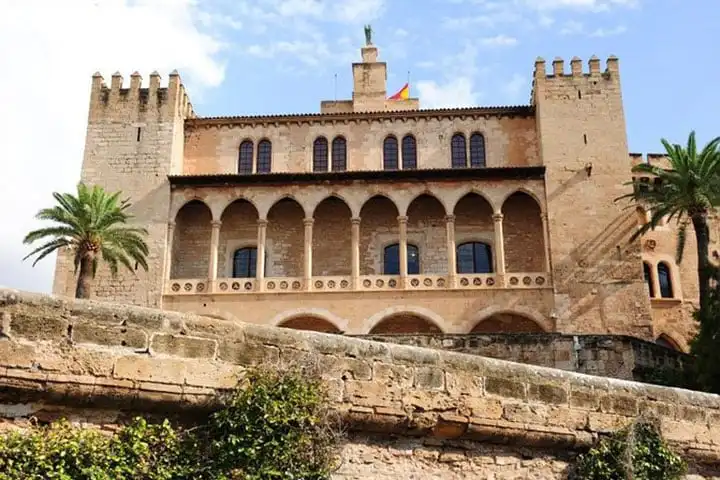
Right next to the cathedral, you will find the Royal Palace of La Almudaina, a must in Majorcan history, to see if you visit Palma de Mallorca on foot. The residence of the Moorish kings before the Christian reconquest, it offers a dive into Majorca's royal past with:
- its courtyard of honour,
- its richly decorated rooms
- and a stunning view of the sea.
5. Head to the Arab baths
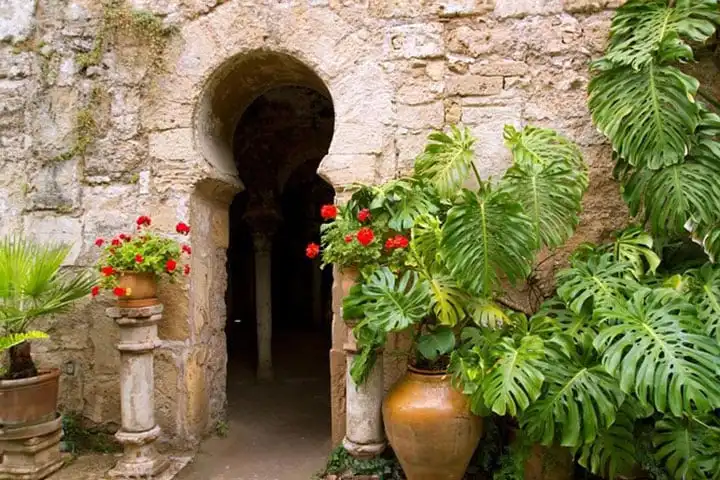
One of the few remnants of Palma's Muslim period, these 11th-century baths are part of the island's historic heritage. They are hidden in a small lane in the old quarter of the historic centre. Their vaulted hall and garden make a quiet stop and let you travel back in time to when the baths were a place of relaxation and sociability. During this visit, you will discover Palma de Mallorca during the period of Arab rule.
6. Admire the historic patios
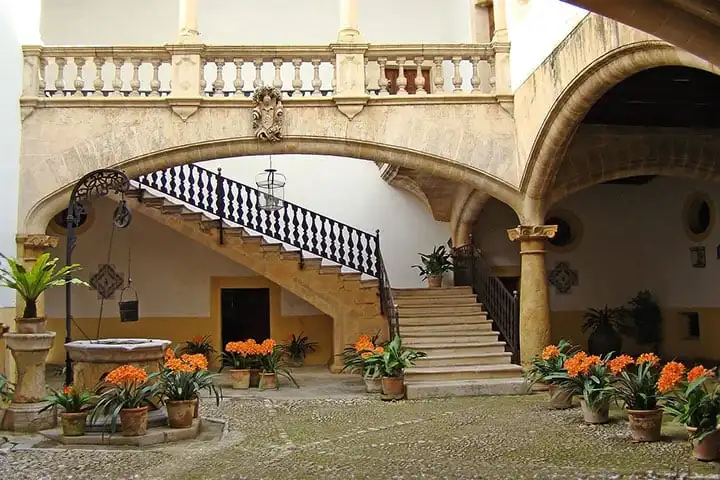
Around the corner of the lanes, discover the charming inner patios, typical of Palma's noble residences. These courtyards, carefully decorated and often hidden behind large wooden doors, are a testament to Majorcan heritage. A unique way to observe the understated elegance of the old manor houses.
Here are the 6 patios to discover if you come to visit Palma de Mallorca:
- Cal Marqués de la Torre
- Can Balaguer
- Can Bordils, one of the oldest
- Can Vivot, one of the most spectacular, on Carrer de Can Savellà
- Can Oleza, which you can see from the outside
- Casal Solleric
7. Go to the Plaça Major
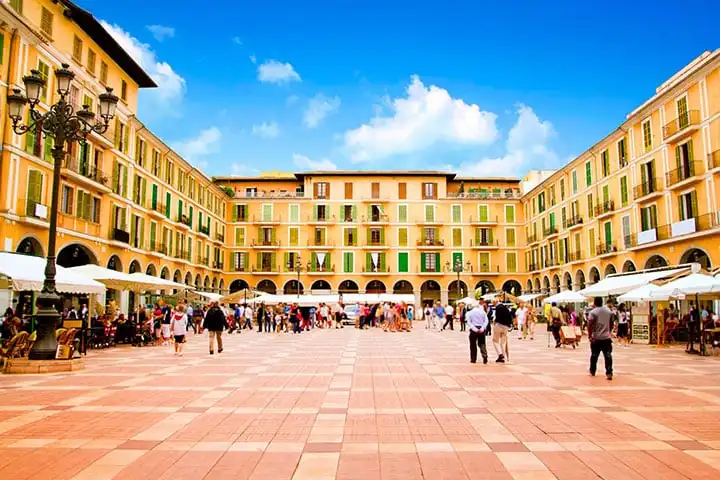
The nerve centre of Palma, this pedestrian square is lined with yellow arcades and colourful buildings. At 3,000 m², it is the largest square in the city, an ideal starting point for exploring the historic centre, discovering local shops and the market. It is also a chance to relax on a terrace during your walking tour and watch the lively city life.
8. See the Gran Hotel - CaixaForum
A Modernist icon built in 1903, the Gran Hotel is now an arts and culture centre. Its original architecture, with its finely decorated façades, is a must for art lovers. Enjoy the temporary exhibitions and the café-restaurant for a break in a setting that is both historic and artistic.
9. Stroll along the Rambla of Palma
Continue to the Rambla, a famous pedestrian avenue lined with flower stalls. This pleasant spot, particularly charming during Christmas markets and other seasonal events, is perfect for a peaceful walk in a natural, colourful setting.
10. Visit the Es Baluard museum
Set in the city walls, the Es Baluard museum is dedicated to contemporary art and offers a unique perspective on Majorcan culture. In addition to its exhibitions, the museum's terrace gives you a stunning view over the Bay of Palma, ideal for capturing an unforgettable memory of the city.
If you have more time, don't miss discovering:
- The Convent of Santa Clara founded in the 13th century
The Castillo Museu de San Carlos, a historic fortress from the 17th century turned military museum - The Fundación Bartolomé March in the heart of Palma
- The Castell de Bellver
Where to walk in Palma de Mallorca? Best itinerary
Here is an itinerary if you want to visit Palma de Mallorca on foot, so you can discover its historic heart, its beautiful buildings, monuments and cultural places. It is also a chance to stop at good restaurants in the historic Llotja district.
Palma is a city of history with a rich maritime past, long coveted for its strategic position in the Mediterranean, and a city rich in historical heritage. During your stay in Palma de Mallorca, don't miss going to admire the "La Seu" cathedral, the Almudaina Palace or Bellver Castle.